
If you are weighing up a modern gas boiler against an air source heat pump, the right choice depends much more on your home’s characteristics and lifestyle than on the technology alone. In typical homes around Bognor Regis, Chichester, and Littlehampton, both systems can perform excellently when selected and designed to suit your specific needs. Factors like your property’s insulation, heat loss, radiator setup, hot water use, available outdoor space, and noise tolerance all play a crucial role in finding the best fit. Understanding these will help you make a confident decision that ensures comfort, efficiency, and long-term satisfaction.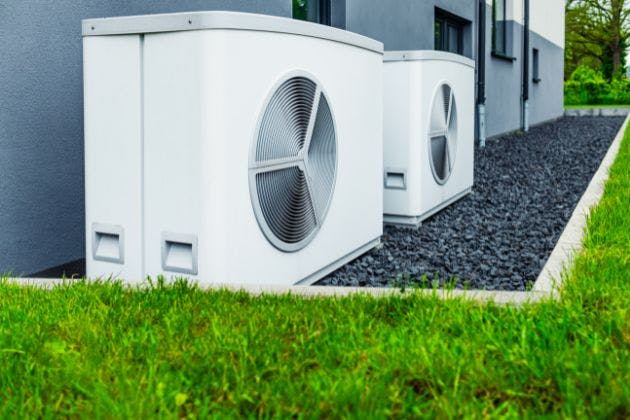
How boilers and heat pumps actually heat your home
A modern gas boiler is a high-temperature system. It heats water to a relatively high flow temperature, which means it can work well with standard radiators and can respond quickly when you turn the heating up.
An air source heat pump is a low temperature system. It lifts heat from the outside air and delivers it into your home at a gentler flow temperature, usually working best with larger radiators or underfloor heating and longer, steadier run times.
Boiler: hot flow temperatures, short, sharp heating cycles, familiar controls
Heat pump: lower flow temperatures, long steady operation, higher efficiency when designed well
Hybrid: a boiler and heat pump working together under one control strategy
Understanding these different heat delivery styles is key, because it affects comfort, radiator sizing and how your home needs to be set up for each option.
Suitability factors: what your home needs for each system
Insulation, draughts and overall heat loss
All heating systems work better in well-insulated homes, but heat pumps are particularly sensitive to heat loss. If your walls, loft and floors are improved and draughts are tackled, a heat pump can run at lower temperatures and still keep you warm.
Older, draughty properties with solid walls can still use a heat pump, yet they usually need a thorough heat loss assessment and often some upgrade work. A boiler will generally cope more easily with higher heat loss, although you may see more temperature swings and higher gas usage.
Radiators, underfloor heating and other emitters
Because boilers produce hotter water, they can typically work with existing radiator sizes. You can often keep most of your emitters, perhaps tweaking in cold rooms or bathrooms if needed.
Heat pumps prefer larger surface areas to release heat. That can mean upsizing key radiators, adding extra panels, or using underfloor heating to spread gentle warmth. When emitters are sized correctly for lower flow temperatures, comfort is very even and consistent.
Hot water demand and storage
Combination boilers produce hot water on demand, which suits smaller homes with one bathroom and limited airing cupboard space. Larger system boilers with cylinders handle multiple bathrooms, long showers and bath filling more easily.
Most air source heat pumps supply hot water via a cylinder. This gives very stable hot water performance, but you do need space for a well insulated tank and associated pipework. If your home has no cylinder at present, this is an important consideration.
Outdoor space, appearance and noise
A boiler’s main presence is indoors, with a flue to outside. As long as flue terminal clearances and ventilation rules are met, there is usually little impact on the garden or façade.
A heat pump unit sits outside and needs clear airflow around it. You will need space on a wall or ground frame, decent access for servicing, and thought about where any sound carries to. Modern units are quiet, yet their position relative to neighbours and bedrooms is still important.
A simple decision framework for your West Sussex home
1. What home type are you working with?
Older solid-wall cottage or terrace: Often higher heat loss and tighter layouts. A well-specified boiler can be a straightforward choice, while a heat pump may require larger radiators, insulation upgrades and careful design.
1930s semi or similar suburban house: These homes can suit either option. If you are happy to improve insulation and adjust radiators, a heat pump can provide very stable comfort. If you prefer minimal changes indoors, a modern boiler may feel simpler.
New build flat or recently built house: Newer properties tend to be well insulated and relatively airtight, which is ideal for heat pumps. There may be planning and space constraints in flats, so the available outdoor area and any building rules must be checked.
2. What sort of comfort do you expect?
If you like a steady background warmth all day, perhaps with people working from home, a heat pump’s low-temperature, continuous approach can feel very comfortable. Rooms stay at a more constant level with fewer ups and downs.
If you tend to use heating in short bursts, turning it off and on for quick blasts of warmth, a boiler may match your habits more easily. It can ramp up quickly, although modern controls can help both systems run more smoothly.
3. What constraints does your property have?
Planning and permitted development rules apply to outdoor units. Many heat pump installations fall under permitted development, but not all, and flats or conservation areas can be more complex. Flue positions for boilers also have regulations, though they are usually simpler to address.
Outdoor space matters as well. If you have a small courtyard or balcony, finding a suitable, quiet location for a heat pump can be tricky. Your electrical supply rating also needs checking, as a heat pump draws more power than a standard boiler.
Where a hybrid system can make sense
A hybrid setup combines an air source heat pump with a gas boiler under one set of controls. The system can prioritise the heat pump when conditions suit it, with the boiler stepping in for very cold weather or heavy hot water demand.
This can be attractive in homes with limited radiator upgrades, very high hot water use, or where you want to reduce gas consumption without changing everything at once. Good control design is crucial so that the two systems complement, rather than fight, each other.
The role of professional design and setup
Whether you choose a boiler or a heat pump, the quality of the design work is often more important than the brand name. A thorough room-by-room heat loss calculation helps size the system correctly so it runs efficiently and keeps every space comfortable.
For heat pumps, this also guides radiator or underfloor sizing and flow temperatures. For boilers, it can support lower flow temperature operation and better control strategies. Proper commissioning, balancing and setup of controls makes a major difference to running performance.
A professional installer should also talk you through how to use your new system day to day. This includes setting schedules, managing hot water, and understanding what to expect from a low temperature or high temperature system in different weather.
Next steps: talk through your options with a local expert
If you are leaning towards a modern boiler, booking a dedicated boiler survey is a sensible first step. You can discuss heat loss, radiator condition, hot water needs and controls in detail, then explore options on the Boiler Installation side of our work.
If you are curious about heat pumps, arranging a heat pump survey and design chat will help you understand what upgrades, emitter changes and space considerations apply in your home. You can start that conversation via our Heat Pump Installers page and the wider services listed in our Services hub.
For clear, impartial advice tailored to your property, you can speak with The Sussex Heating Care Company on 01243820474 and explore whether a boiler, a heat pump or a hybrid approach is the best fit for your home.