
Looking after a heat pump is simpler than many people think, but it does need some routine care to keep it running reliably and efficiently. Homeowners can easily carry out simple checks like keeping the outdoor unit clear of debris, ensuring vents aren’t blocked, and listening for unusual noises or signs of ice build-up. Regular professional servicing is also essential to check the refrigerant levels, electrical components, and overall system performance. With this mix of light homeowner care and expert maintenance, your heat pump can provide comfortable, energy-efficient heating for many years.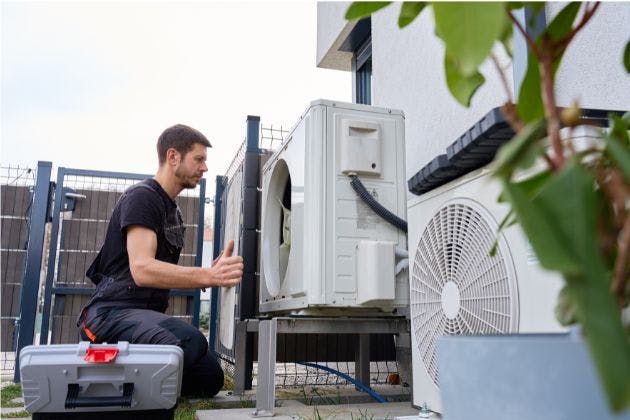
Simple heat pump checks you can safely do
Homeowner maintenance should always be light-touch and visual. Anything involving electrics, refrigerant or internal components needs a qualified heat pump engineer.
Most of your routine checks are about keeping air and water flowing freely, and spotting early warning signs before they turn into breakdowns.
Keep the outdoor unit clear: Gently remove leaves and debris around the unit, keeping at least 30 cm of clear space on all sides.
Check for blocked vents indoors: Make sure radiators and grilles are not hidden behind furniture, curtains or large objects.
Listen and look: Take note of new noises, heavy ice build-up or obvious damage, and call an engineer if you are concerned.
Avoid using pressure washers or tools on the outdoor unit, and never remove covers. If in doubt, leave it to a professional.
Outdoor unit: keeping it clear and protected
The outdoor heat pump unit needs a good flow of air to work properly. If the airflow is restricted, efficiency drops and the system has to work harder to reach the same temperature.
Check around the unit every few weeks, especially in autumn and winter. Sweep away leaves, move plant pots and trim back bushes so they do not grow into the casing or block the intake and exhaust.
In cold weather, a light coating of frost is normal, as the system will periodically defrost itself. Thick ice that does not clear, or ice covering pipework and the fan area, should be checked by an engineer.
Indoor checks: vents, controls and performance
Inside the home, your role is mainly to let the system breathe and to understand what “normal” looks like for your heat pump. This helps you recognise when something changes.
Keeping radiators and vents unblocked
Heat pumps work best with good circulation. If radiators, fan convectors or underfloor manifolds are hidden behind large furniture, they cannot release heat properly, and rooms may feel cooler or uneven.
Try to leave a bit of space in front of each heat emitter. If a room struggles to heat up, check that valves are open and nothing is obstructing the airflow before assuming there is a fault.
Understanding basic controller settings
Most modern controls are designed to be set up by an installer, but it is still useful to know the basics. Energy Saving Trust and other trusted organisations advise running heat pumps at lower flow temperatures for longer periods, rather than short, hot bursts.
Learn how to:
Adjust room temperature setpoints
Change schedules for heating and hot water
Switch between "weather compensation" and simple fixed temperature, if available
If you are unsure, note the current settings before making any small adjustments so you can change them back if needed.
Monitoring performance changes
Your heat pump will run differently to a traditional boiler. Longer run times are normal, but sudden changes can be a sign that something is not quite right.
Keep an eye out for:
• Rooms taking much longer than usual to warm up
• The unit running almost constantly on mild days
• New or louder noises, especially grinding or rattling
• More frequent tripping of breakers or safety devices
If you notice these issues, book a professional check rather than trying to adjust internal settings yourself.
What a professional heat pump service includes
A proper service goes far beyond a quick look at the outdoor unit. A qualified engineer will follow manufacturer guidance and industry best practice to test and optimise the whole system.
Typical tasks during a service visit include:
Refrigerant circuit checks (where applicable) to confirm there are no leaks, pressures are within range and safety devices are operating correctly. Homeowners should never attempt anything involving refrigerant.
Electrical and safety checks, including terminals, insulation resistance, sensors and protection devices. This reduces the risk of faults and helps keep the system running reliably.
Flow temperatures and set-up are reviewed so the heat pump can deliver enough heat at the lowest practical temperature, improving comfort and efficiency.
Filters and strainers in the heating and hot water circuits are cleaned or replaced to maintain good flow rates and protect pumps and heat exchangers from debris.
System pressure is checked and topped up if needed, and expansion vessels are tested so they can safely absorb changes in system volume.
If your system uses glycol for frost protection, the glycol concentration is checked and adjusted for effective protection without hurting performance. The engineer will also review overall performance optimisation, including controls, circulation and any logged fault codes.
How often should a heat pump be serviced?
Most manufacturers and trusted bodies such as the Energy Saving Trust recommend a service once a year, similar to a boiler. This helps keep warranties valid and efficiency high.
In some low-use or very mild coastal settings around Bognor Regis, Chichester and Littlehampton, an engineer may suggest slightly different intervals based on your specific system. However, annual checks are generally a good habit for long-term reliability.
Maintenance, efficiency and common concerns
Can lack of maintenance reduce efficiency?
Yes. Blocked strainers, dirty filters or poor airflow around the outdoor unit all make the heat pump work harder for the same heat output. That means higher running hours and more wear on components.
Regular light homeowner checks, combined with a professional service, help keep efficiency close to the original design performance.
How do I know if it is undersized or incorrectly set up?
Signs of an undersized or poorly set-up system include rooms consistently failing to reach temperature in colder weather, or the system running almost non-stop without maintaining comfort.
Other clues are very high flow temperatures being used all the time, noisy cycling on and off, or big differences in warmth between rooms. An experienced engineer can assess your heat loss, system design and control strategy to distinguish between a genuine sizing issue and a settings or balancing problem.
Improving comfort in older properties
Older homes in areas like Bognor Regis, Chichester and Littlehampton can work very well with heat pumps, but they sometimes benefit from tweaks after the first heating season.
Emitter upgrades, such as larger radiators or fan-assisted units in key rooms, can help release heat more effectively at lower flow temperatures. This improves comfort and efficiency without needing very hot water.
Weather compensation adjusts the flow temperature based on the outdoor conditions, giving steadier temperatures indoors. When set up correctly, this is often one of the biggest comfort upgrades available.
System balancing ensures each radiator or circuit gets the right share of flow. If some rooms are hot and others are cool, professional balancing can transform how the home feels without changing the main equipment.
Arrange a heat pump service or optimisation visit
If you would like to keep your heat pump running efficiently, or you are not quite happy with comfort levels, it is worth booking a professional review rather than living with issues. An experienced engineer can check performance, fine-tune controls and explain how to get the best from your system.
For expert heat pump servicing, optimisation and central heating support in Bognor Regis, Chichester and Littlehampton, contact The Sussex Heating Care Company on 01243820474. You can arrange a heat pump service or an optimisation visit, and get friendly advice on your options for Heat Pump Installers and Central Heating Services.